The Inbox for Your AI
Your local tools can't chat with Telegram users or receive emails. They're stuck in your local network. DeadDrop fixes that. Receive, process, and send messages from your scripts, Claude Code, LM Studio, and Open WebUI.
No Local Servers, No Tunneling
No ngrok. No webhook servers. No reconfiguring URLs after every restart.
Messages Wait for You
Not always-on? No problem. Messages accumulate until your local AI checks in. No missed webhooks, no race conditions, no being on-call.
One Pattern for Everything
Email, Telegram, Slack, GitHub - all flow through the same inbox. Learn one API, connect everything. No per-service integration code.
No Complex OAuth Setups
Native integrations require app registration, scopes, and tokens. With DeadDrop, just forward what you need. No all-or-nothing account access.
Send and Receive
Your tools can read incoming messages AND post outbound alerts. Slack notifications, Telegram replies, webhook callbacks - all from the same topic.
Works With Local AI
Run your own models? DeadDrop bridges the gap without forcing your data through cloud AI. Use local or cloud - your choice.
Connect Everything
Bidirectional bridge between your local tools and cloud services.
What You Can Build
Countless automation possibilities. From personal capture to developer workflows.
Daily Braindump
Fire off thoughts to Telegram throughout the day. End of day, Claude Code summarizes everything into organized notes. No copying, no exporting, no friction.
Email to AI Processing
Forward emails to your local AI without building an email server. Daily summaries, newsletters, notifications - your AI extracts what matters and updates your task list.
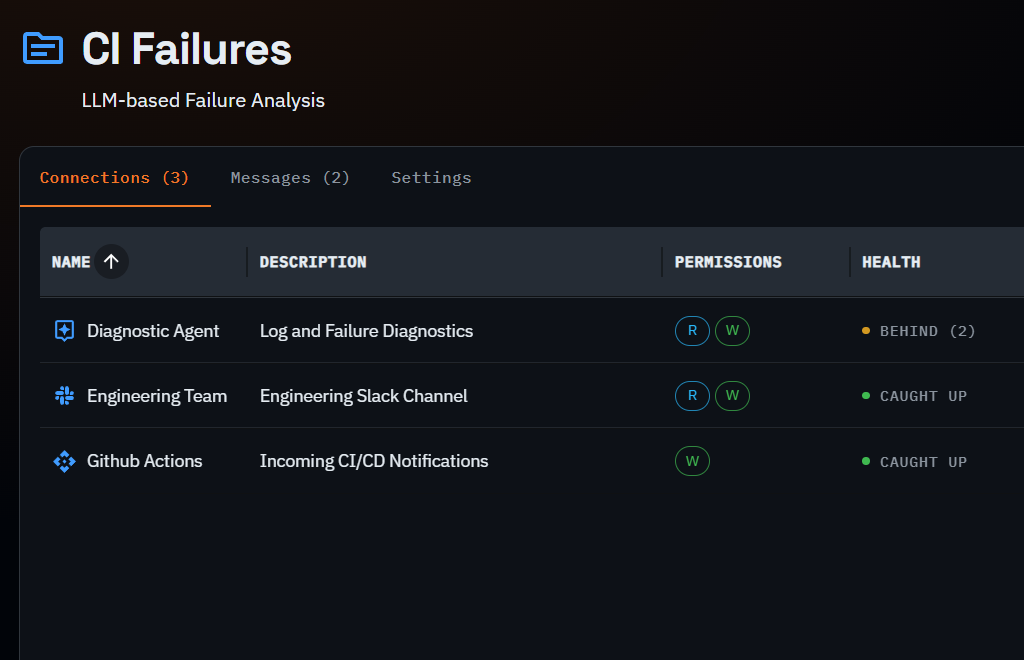
CI Failure Triage
Build fails, GitHub sends the webhook. Your local AI reads the logs, diagnoses the issue, and suggests a fix. No cloud AI sees your code.
Morning Status Briefing
Your overnight agents post updates to a shared topic. Wake up, have your local AI summarize everything in 30 seconds. No log reading required.
Simple Pricing
Cloud connectivity without cloud complexity.
Trial
Try all premium integrations for free.
- 5 topics, up to 6 connections each
- 100 messages buffered per topic
- Core & Premium integrations
- 7-day message retention
- 5 KB message size
- Community support
Basic
For tinkerers and personal automation.
- 5 topics, up to 6 connections each
- 100 messages buffered per topic
- Core integrations (REST, MCP, Webhook, Email)
- 7-day message retention
- 5 KB message size
- Email support
Pro
RecommendedAll integrations for power users and developers.
- 50 topics, up to 10 connections each
- 1,000 messages buffered per topic
- Core & Premium integrations
- 30-day message retention
- 10 KB message size
- Priority support
Your Local AI, Connected to the World
Receive emails, Telegram messages, and GitHub webhooks. Send alerts to Slack and Discord. Your AI, fully connected - no server, no tunneling, no always-on infrastructure.